Copper measurements in KLOW peptide research
The interesting unit in the skin experiment is copper per area of skin. That keeps the result tied to the element the investigators actually followed.
Prepared skin and copper
Hostynek and colleagues applied a copper tripeptide to human skin prepared outside the body and measured penetration and retention by skin layer. For dermatomed skin, which has been cut to a controlled thickness, the permeability coefficient was 2.43 ± 0.51 × 10⁻⁴ cm/h. That describes passage through the preparation under the experiment’s conditions.
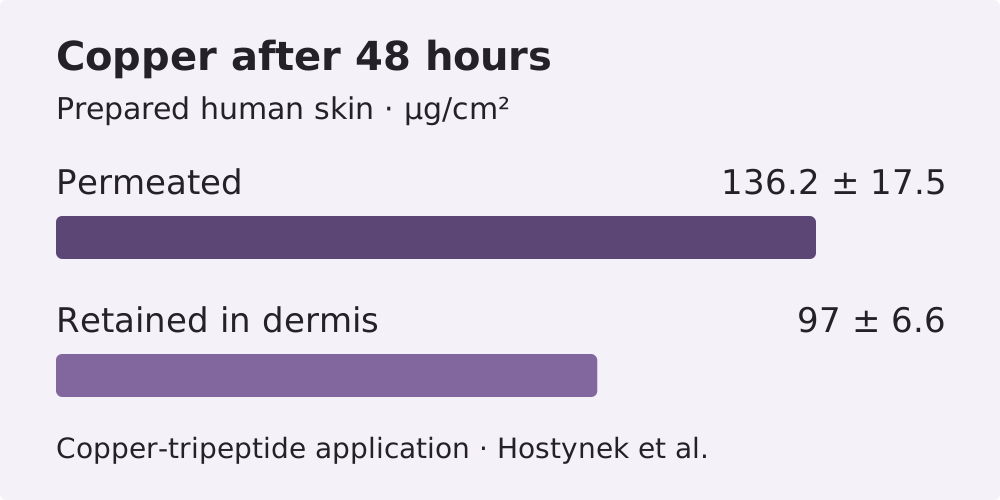
Over 48 hours, 136.2 ± 17.5 µg/cm² of copper permeated, while 97 ± 6.6 µg/cm² was retained as a dermal depot. These are measurements of copper per area of skin. They describe different destinations; they do not measure wound closure, pain relief or safety of a KLOW injection.
A named location for the measured metal helps. “Absorbed” can hide several destinations, whereas a depot names a place where copper remained. Copper’s chemical identity at each destination is my next uncertainty: how much material retains the original copper-peptide pairing?
A depot is copper retained within the prepared dermis. The experiment does not establish harmful accumulation from KLOW in people.
GHK and its copper complex
GHK-Cu holds a copper(II) ion in a 1:1 complex: one copper ion associated with one GHK peptide. The skin-regeneration review describes this copper-binding tripeptide and the range of repair processes studied around it. GHK-Cu is also called Copper Tripeptide-1.
The 1988 fibroblast experiment gives a particularly tangible result. Collagen synthesis increased in cultured human cells; stimulation began between 10⁻¹² and 10⁻¹¹ M and was maximal at 10⁻⁹ M. Cell numbers remained unchanged. I favour this small, legible finding over a general claim of rejuvenation: the cells altered their production of a structural protein.
The 2008 tissue-remodelling review ranges more widely, describing collagen, elastin and repair-related signalling across animal and human work. The 2018 gene-expression review concerns laboratory and database findings about changed cellular instructions. Approximately 2,100 genes met its change threshold; the familiar estimate of 4,000 is an extrapolation. Of affected genes, 59% increased expression and 41% decreased it at a 50%-or-greater threshold. Protein-clearance pathways included 41 genes up and 1 down. Those counts measure gene activity.
Topical delivery findings
The 2025 review of topical GHK describes poor passage through the skin’s outer barrier as a formulation challenge and discusses ways investigators have tried to improve delivery. That concern sits alongside the copper-penetration experiment because the preparation, the measured substance and the tissue conditions matter.
The older skin-regeneration review reports topical GHK-Cu increasing collagen production in 70% of treated women, compared with 50% for vitamin C and 40% for retinoic acid. It also describes plasma GHK at about 200 ng/mL at age 20 and about 80 ng/mL by age 60. Those blood measurements describe GHK levels, and the skin findings concern topical preparations. Neither supplies a tested systemic KLOW treatment.
Copper arriving in tissue is interesting. A useful treatment would also need a demonstrated clinical benefit and an adequate account of harm. The component outcomes show how far the existing experiments get.